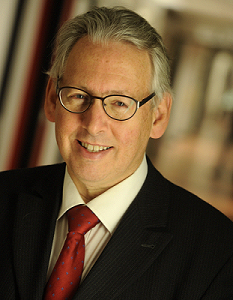
Dr. Timothy Sands, retired air force/space force Colonel, was ranked in the world’s top 2% of scientists by Elsevier/Stanford in 2021, 2022, 2023, 2024, and 2025 with an in–field (aero/astro) world’s rank of top 0.422% (in aero/astro), and top 5.9% of all scientific researchers at Cornell University. He has served as university chief academic officer, providing leadership and guidance to faculty, staff, students, and the Chancellor's C-suite in all areas relating to Academic Affairs as well as counsel to the Chancellor and C– C-suite in all matters related to management of the University. As chief academic officer at a Carnegie-R2–R2 university, his leadership in achieving the University’s mission placed students at the center of the educational experience in response to the educational requirements of sponsors and recipients of graduates. For example, he led the deployment of translation instruction of U.S. acquisition logistics courseware, which was hailed as decisive to the on–time withdrawal of U.S. forces from Iraq. He provided leadership regarding accreditation; faculty selection, evaluation, and performance; analysis of the division's academic programs, policies, and procedures; and major operational issues. His career has been largely spent between the two postgraduate military universities (Naval Postgraduate School and Air University) and Cornell University. He most recently assumed the role of Air University’s Department Chairman, Lead Astronautics Instructor, and Tech Expert of the Air Force’s Test Pilot School’s re–reactivated astronautics Department.
Service as a Dean at a Carnegie-R2 university and Associate Dean at a Carnegie-R1 university motivates his collaborative academic leadership style, actively embodying shared governance, working closely with the Academic Senate and University Committees to maintain institutional focus on the campus mission and to enhance student learning and success. He led a university–wide inspection with a visual audit of all workspaces, ensuring a dignified and respectful climate. He worked in close collaboration with other divisional leaders to achieve the university’s mission, initiating the creation of a new, multidisciplinary School, dismantling silos of excellence. His efforts fostered the development and enhancement of high-quality, innovative degree, certificate, and credential programs, as well as shorter-term certificate programs and micro-credentials to meet federal workforce development needs. He incorporated emerging technologies, pedagogies, and course structures to integrate three geographically separated satellite campuses, evolving the academic fabric of the University. He drove accreditation preparation for a novel distance learning space operations degree program with embedded, stackable certificates, impressing the external review team, which bestowed the highest rating. Furthermore, he hosted Egyptian Army senior Generals and coordinated foreign language degree programs, increasing Egyptian interest and student enrollment. He also led strategic planning with the Uzbek Ministry of Defense and brokered a new faculty and student exchange.